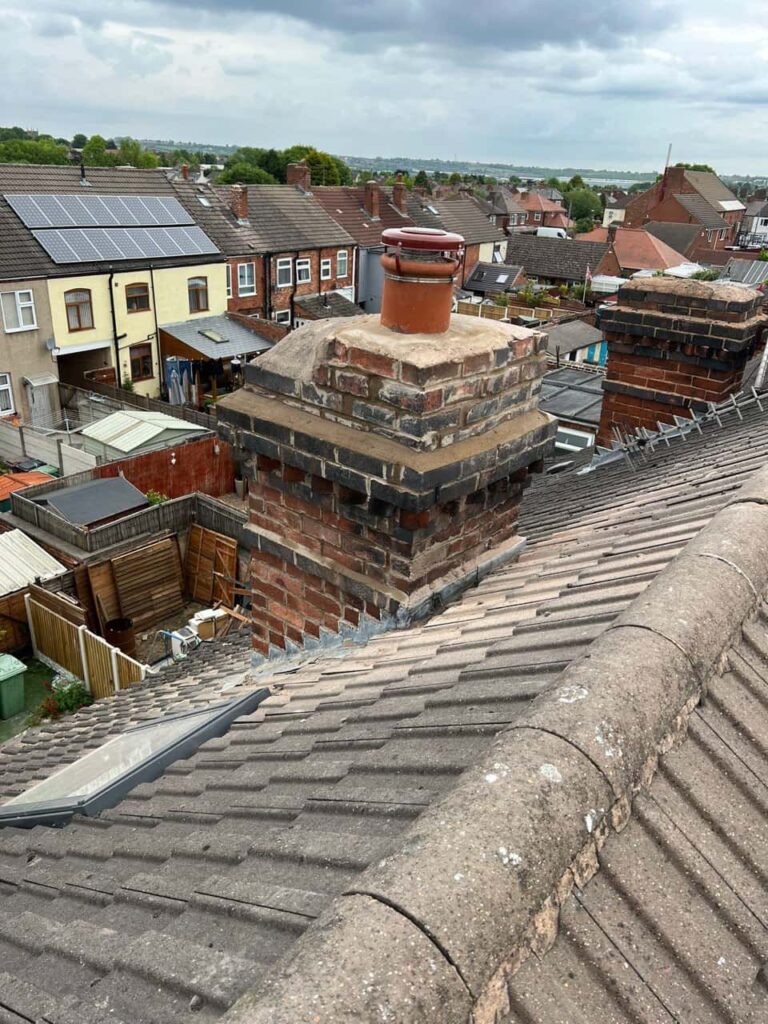
Strong winds and heavy rainfall can affect a roof without causing an immediate or obvious leak. Tiles may move slightly, flashing can lift at the edges, and drainage components may become blocked by debris. The roof may continue to appear intact from ground level while its resistance to the next period of rain has already been reduced.
A timely roof inspection can identify these less visible defects before further rainfall allows water to enter. Understanding which areas require attention helps protect the roof covering, supporting materials and interior of the property.
Important Areas to Check Following Stormy Weather
Displaced, Cracked or Missing Tiles
Tiles and slates form the roof’s primary defence against rain. High winds can lift them, loosen their fixings or move them far enough to affect the correct overlap. Some may remain on the roof but no longer provide dependable coverage.
Cracks and broken corners also matter. Even a relatively small opening may allow wind-driven rain to reach the underlay, particularly during prolonged downpours. The inspection should include the surrounding tiles because movement in one area can place pressure on neighbouring coverings.
Ridges, Hips and Verges
The exposed edges and highest points of a roof receive considerable force during a storm. Ridge and hip tiles can become loose, while mortar or mechanical fixings may deteriorate or shift.
Verges along the sides of the roof should also be checked for gaps, displaced materials and failing mortar. Defects in these areas can allow rain beneath the covering and may become more extensive during the next spell of strong weather.
Lead Flashing and Roof Junctions
Flashing protects the joints around chimneys, walls and other roof penetrations. Wind can lift an exposed edge, while movement in adjoining materials may open a narrow gap that is difficult to see from below.
Because these junctions manage concentrated water flow, a small defect can result in significant moisture entry. Flashing should be checked for lifting, splitting, poor alignment and separation from the surfaces it is intended to protect.
Chimneys and Their Surrounding Materials
A chimney creates several vulnerable junctions within the roof. Following a storm, the flashing, mortar joints and nearby tiles should all be examined.
Water staining near a chimney does not automatically mean that the chimney itself is the sole cause. Rain may be entering through an adjacent tile or flashing joint before travelling along concealed timbers. A complete assessment is needed to locate the actual entry point.
Valleys and Drainage Channels
Roof valleys carry water from two adjoining slopes and can receive substantial flows during heavy rain. Leaves, twigs and storm debris may restrict these channels, causing water to back up beneath nearby tiles.
The valley lining should be checked for cracks, displacement and deterioration as well as blockages. Clearing debris alone may not resolve the problem if the material underneath has already been damaged.
Gutters and Downpipes
Storms can fill gutters with leaves, moss and fragments from the roof. When outlets become restricted, rainwater may overflow against fascia boards, walls or roof edges instead of draining away correctly.
Gutters should be checked for sagging, damaged joints and sections that have pulled away from their fixings. Downpipes must also remain clear so that water can leave the roof efficiently during the next downpour.
Flat Roofing and Perimeter Details
Flat roofs require particular attention after severe weather because water may collect where outlets are blocked or the surface has been disturbed. Checks should cover seams, joints, upstands and the edges where the covering meets walls or trims.
Blistering, splits and lifting sections can all reduce weather resistance. Standing water may also indicate that drainage is restricted or that movement has affected the roof’s falls.
Fascias, Soffits and Roof Edges
Fascias and soffits help protect the lower edge of the roof. Wind-driven debris or loosened guttering can damage these components and expose the area behind them to moisture.
Gaps, cracks, staining or loose sections should be investigated. Damage around the roof edge may also indicate that the first courses of tiles or their fixings have been disturbed.
The Roof Space
Where it is safe and accessible, the roof space can reveal early signs of water entry that are not yet visible in occupied rooms. Damp underlay, moisture marks on timbers, wet insulation and daylight entering through unexpected gaps can all indicate storm damage.
The internal sign may not sit directly beneath the external defect because water can travel along roofing materials before dripping. This is why tracing the route of moisture is more reliable than repairing the area above a ceiling stain without further investigation.
Why a Professional Inspection Matters
Homeowners can look for obvious changes from ground level, but climbing onto a roof after a storm can be hazardous and may cause additional damage. Many defects also require close inspection and roofing knowledge to identify correctly.
LJ Roofing Covingham can assess the complete roofing system rather than focusing only on the most visible symptom. Identifying displaced coverings, failed junctions, drainage problems and concealed moisture allows repairs to address the underlying cause before further rainfall worsens the damage.
Conclusion
After a storm, the roof covering, ridges, verges, flashing, chimneys, valleys, gutters, flat roofing details and roof space may all require attention. Damage is not always immediately obvious, and a roof that appears secure can still contain small openings or weakened components.
If your property in Covingham, Wiltshire, has recently been exposed to stormy weather, contact LJ Roofing Covingham to arrange a professional inspection. Prompt assessment can identify what needs attention and help restore dependable protection before the next downpour.
Call us on: 01793 569 296
Click here to find out more about LJ Roofing Covingham
Click here to complete our contact form and see how we can help with your roofing needs.